Pages

Thursday, 3 August 2017

Anatomy of the organs

The Brain
What is the brain?

The brain is an organ placed at the top of your spinal cord (Or in your head), and its purpose is to control the body, and send messages or almost like commands to tell your body what to do. This is what happens when you move or speak.

The Eyes
What are the eyes?
Your eyes are found in sockets on your face and come in a variety of different colours. Their purpose is to give you eye sight, so you can see everything around you.

The Oesophagus
What is the oesophagus?

The oesophagus is found in your throat area, and its function is to carry food, liquid and saliva to the stomach. Your oesophogus is very important, it carrys the food liquid and saliva to the stomach by coordinated contractions of its muscular lining.


The Lungs
What are the lungs?

lungs are found in your chest, and come in sets of two. Their main purpose is to allow you to breathe and pump oxygen up and into your brain. With out at least one lung you would most certainly die.
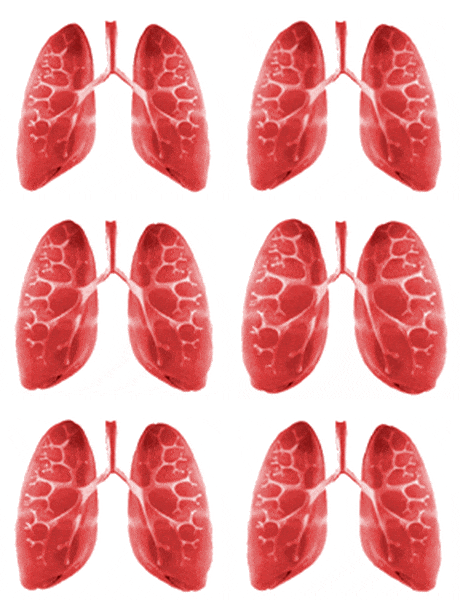
Image result for Lungs gif

Heart
What is the heart?

The heart is one of the most important organs in your body. It pumps blood around your whole body and gives you circulation. It is, like the lungs, located in your chest. It is just above the lungs and on the right side of your body.


Liver
What is your liver?

Your liver is a large, meaty organ placed to the right, above your stomach. It is the largest in organ in your body, and its function is to keep the body pure of toxins, and makes proteins important for blood clotting. But its main purpose, is to filter the blood coming from the digestive tract, before passing it on to the rest of the body.

Stomach
What is your stomach?
Your stomach is a muscular organ located on the left side of the upper abdomen. Its purpose is to recieve food from the oesophagus, and pass it on to the small intestine. It holds food after ingestion and contains hydrochloric acid
Small Intestine
What is your small intestine?
The small intestine is an organ located right underneath the stomach. Its function is to receive food and liquid from the stomach, and absorbs the nutrients and minerals before passing it on.


Large Intestine
What is your large intestine?

Your large intestine is placed around the small intestine. Its purpose is to carry food down to the final part of the digestive system, and in the process, absorb the water from the remaining indigestible food.


Rectum

What is the rectum?

The rectums purpose is to absorb electrolytes and decompose indigestible food. Before passing the remaining contents through the last part of the digestive system

Anus

What is the anus?

The anus is the last part of the digestive system and its purpose is to empty what ever is left that the other parts of the digestive system couldn't dissolve/absorb/decompose out of the body.


Kidneys

What are your kidneys?

The kidneys are to medium sized bean shape organs located near the abdomen. They filter blood and are responsible for the creation of urine and hormones.

Image result for kidneys

Pancreas

What is the pancreas?

The pancreas, being an organ part of the digestive system, is connected to the stomach and its purpose is to break down carbohydrates, fat and protein.


Gall Bladder

What is your gall bladder?

Your gall bladder is a small organ that stores bile before it is released into the small intestine.

Image result for Gall bladder

Spleen

What is the spleen

The spleen is an organ that can be found underneath the heart, and its purpose is to fight infections and diseases to keep you healthy and strong
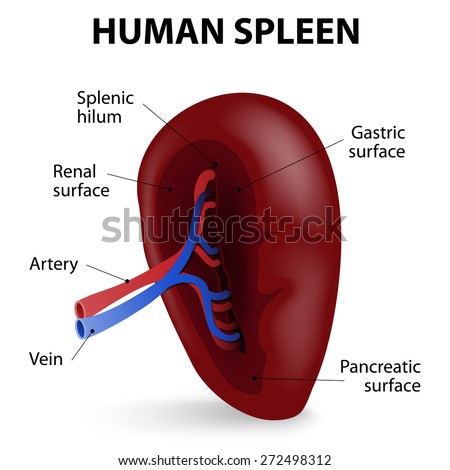
Image result for Spleen

Appendix

What is your appendix?

The appendix is connected to the end of the large intestine, it is an organ that doesn't really have a purpose, and is sometimes removed due to implications.


Human model

Today, Mrs Rhodes brought in a model for us to examine, as we are doing anatomy in science. The model showed all the organs and other parts in the human body. We decided to name him Edward as he reminded us of King Edward the 8th from the side.

Here is Edward the human model:


Wednesday, 2 August 2017

How to Comment on Others Blogs

Quality Blog Comments
Today in cybersmart, we learned how to write a quality blog comment. A quality blog comment should be thoughtful, positive, and helpful for the writer/author.


1. Compliment the authors blog post
2. Add new information
3. Make a connection
4. End with a question
5. Proof read your comment


Tuesday, 1 August 2017

Hauora

Taha Hinengaro: Mental Well being

Mental and emotional well being, or Taha Hinengaro, is a maori proverb meaning mental well being. Its about expressing thoughts and feelings, and clear rational thinking. It is also about being emotionally balanced, and doing things that make you happy. It is important  to stay emotionally balanced and happy in order to have a happy healthy life.


You see mental well being all around you. When you see someone or yourself doing something they love, or when you solve out a difficult problem, using rational thinking.

Taha Tinana: Physical well being 

Taha Tinana is also a maori proverb, meaning physical health. Physical health is about the body, keeping it healthy and looking after it. It is also about the bodies growth, ability to move and development. It is important to look after your body and stay healthy. You can do this by getting plenty of sleep and rest, staying hydrated, eating healthy, exercising and looking after your hygeine.


Like mental well being, physical well being can be found all around you in everyday situations. From people riding their bikes to work or school and people jogging past, to people playing a game of rugby or some other sport at your local park.

Taha Whanau: Social well being

Taha whanau is a maori proverb for social well being. Social well being is about your connection and relationship with your relatives/family members. It is also about your social life with your peers, people around you, and your friends. Here is a D.L.O (Digital learning object) to demonstrate social well being.


Social well being can be seen during a family get together or social event. When your talking to your friends, or making new ones. When you get in contact with someone you haven't talked to in a while or when you talk to someone who shares your hobbies and interests.

Taha Wairua: Spiritual well being

Taha Wairua is also a maori proverb, meaning spiritual well being. Spiritual well being is about your beliefs, your personal identity, and values. Here is a Piktochart to demonstrate the meaning of Taha Wairua/ Spiritual well being


You can see spiritual well being when someone talks about their personality/ where they're from and who they are as a person, about their values and beliefs. These are all examples of spiritual well being.


Monday, 31 July 2017

Drama Skills

Drama Skills

Today we played copy circle, which is where everyone sits in a circle, bar one person who goes out of the room, while the other players nominate someone to be the leader. The leader then does something and the other people copy him/her whilst the person who went out of the room guesses who the leader is.
It sounded silent, apart from the sound of people clapping

It looked like people copying one person while someone else, confused, tries to figure out who the leader is.

It felt a bit confusing when people started doing something and the leader was doing something different\

Dancing with mirrors

We also played the name game, where everyone stands in a circle and threw a ball at someone after saying our name

It sounded like people laughing

It looked like people were getting confused and dropping the ball.

It felt confusing


KiVa Activity

For KiVa, we were told to write a paragraph on a  bullying story that made us stop and think.This is the story of a girl named Ceyanne, who was bullied because she was Native American, and because she had visible scarring in her face after being attacked by her Auntys dog when she was a pre-schooler. This shows that bullying is everywhere, and needs to 

Ceyanne  (See-Anne) began to experience bullying because she is Native American and because, when she was a preschooler, her aunt’s dog attacked her and bit her on the face. She also wore glasses. When Ceyanne was in the second grade, she still had visible scarring on her cheeks and forehead. After she had been in her second-grade classroom for two months, her fellow classmates began to single her out, telling her to “go back to the reservation! We’re you belong!” Her bullying continued all through elementary school – because she thought nobody, including her teacher, school administrators or family members, would understand, she didn’t reveal what she was going through.
Instead, she kept all of her experiences to herself. In middle school, she began to suffer from lowered self-confidence and self esteem. When people told her she would be prettier if she didn’t have the dog-attack scars on her face, she tried to shake the hurt off, but she began to cry. When this happened, the kids would say, “I’m just saying.”
Her grandfather told her she was the most beautiful girl he’d ever seen. Ceyanne began to believe this – even though she still struggles with being self conscious, she is building her self esteem.

You can find more stories like this at https://nobullying.com/bullying-stories-for-kids/

Monday, 24 July 2017

Why Play Games: The Purpose of Warm-ups

What are the purposes of warm ups?
  • They prevent injury
  • They relax mental and physical tension
  • They prepare you physically and mentally for performance work
  • They help you be more expressive with your body.

Warm ups for Drama:

A to Z Drama Games

1, 2, 3, Buzz!
Count around a circle replacing certain numbers with the word "buzz".
2 Truths, 1 Lie
Get to know the group by learning something about them and about how well they can lie!
8 Count Shake
An energetic physical warm-up that helps to generate energy.
About Me
Understand more about a group by discovering facts about them.
Boom Chicka Boom
This is a camp style game that is great for warming up the voice and developing accents.
Catch My Name
Get to know everyone in the group by passing a ball or similar soft object.
Change Places If ....
Test the listening skills of your group whilst getting to know more about them.
Circle Story
A group creating and telling a story together, one word or sentence at a time.
Connect Me
Connect to different words to spark discussions or to delve into characters.
Count Up, Count Down
A team game to encourage patience, turn taking and focus. A great challenge.
Doctor's Surgery
There's only one spare seat in the waiting room and nobody wants you to sit in it! A great energy game promoting teamwork.
Ewy Chewy Toffee
A good warm-up before any vocal work - exercise the jaw and facial muscles
Fruit Bowl / Anyone Who?
A classic game than can be adapted and used in a variety of ways.
Fruit Salad
Warm-up with a fun game that is great as a starter but can be developed beyond 'fruit'.
Grandmother's Footsteps
A firm favourite of younger players....creeping up on a suspicious Grandmother.
HASH (Happy-Angry-Sad-Happy)
Focus on the characterisation during quick changing emotions
Hi John, You're Jolly
A descriptive name game with a group reaction.
Jumping Jelly Beans!
A firm favourite game that is fun and energetic.
Just A Minute
The one minute challenge - could you tell when one minute has passed?
Master Master, Who Am I?
A game to encourage accent, a silly voice or character to disguise your identity.
Mexican Clap
Pass a clap around a circle in super-fast speed....whoosh!
Name Gesture
A common name game to encourage imagination, physical movement and mime when introducing yourself.
Nursery Rhyme Action
Create an improved version of well-known nursery rhymes with actions.
Park Bench
A classic improvisation game based around the characters you might meet on a park bench.
Pass The Emotion
Pass emotions around the circle and see everyones smiley face!
Pass The Squeeze
Work as a team to pass a squeeze from person to person around the circle.
Pass The Word
How many different meanings can a word have based on how it is said?
Personal Advert
Create a personal advert to highlight the best and worst of you or your characters personality.
Random Sound Story
Use some random sounds as the basis for creating a story.
Sculptor & Clay
Mould and create a statue out of the clay of another person
Secret Leader
A game of teamwork and concentration where a detective must spot a secret leader also can help build dramatic tension.
Shape Shifter
Quick thinking game requiring pairs to create shapes called out to them.
Shazzam!
A popular large group game where groups go into battle against one another.
Ship Ahoy!
A classic game - useful to develop listening skills and spatial awareness.
Sit, Lie, Stand
A fun improvisation exercise, and possibly even more fun to watch!
String Tension
Bring a scenes energy up and down with a simple piece of string.
Traffic Lights
An exercise to focus minds ready for a drama workshop.
Trust Circle
An exercise that requires a great deal of trust between the members of the circle and the person inside the circle.
Trust Falls
Develop pair work with a trust exercise.
Trust Lift
Lift a person above your heads with this trust exercise.
Trust Walk
Developing pair cohesion with a game where each person needs the support of the other.
Unfortunately / Fortunately
Create an elaborate story, in pairs or as a group, with many twists and turns.
Wink Murder
An old favourite to out-fox the detective and claim as many victims as possible.
Word Ping Pong
A great exercise to bring those involved into the Drama thought space.
Yes Let's

A twist on 'follow the leader' where everyone has a chance to lead the actions of the group.